Mobile Systems
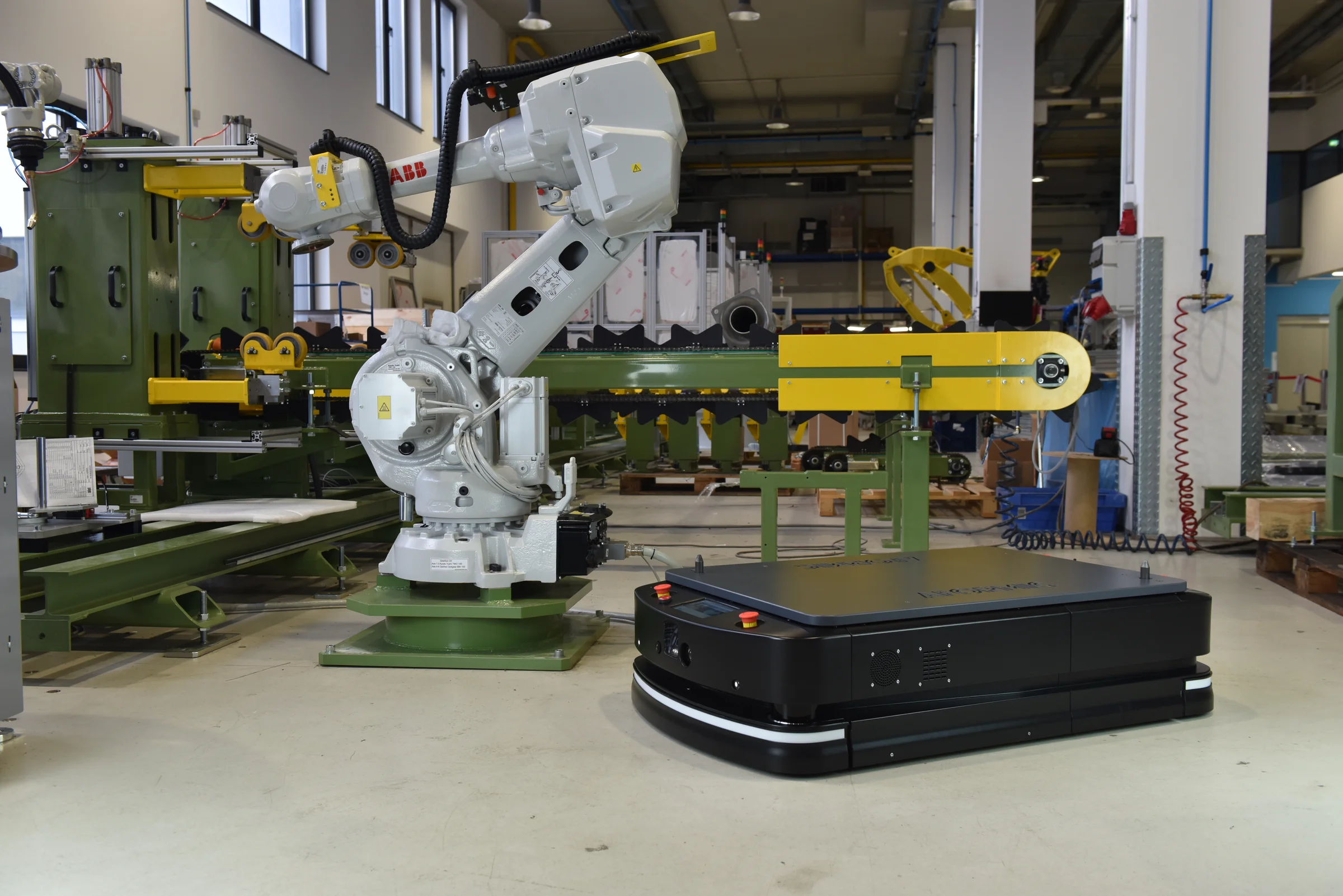
AMRs, tote transport and goods-to-person retrieval, with routes, handoff stations and charging designed around the working shift.
Systems
Robotics, equipment and site infrastructure assembled around the work, from fulfilment and production to delivery and laboratory handling.
Explore SystemsTechnology






Warehouse
Storage, retrieval and dispatch work as one operation, with equipment matched to the inventory, order profile and movement through the site.
AMRs, tote transport and goods-to-person retrieval, with routes, handoff stations and charging designed around the working shift.
Picking, conveyor transfer, packing and palletising, configured for product dimensions, handling limits and the required cycle time.
Connect WMS interfaces and industrial networks. Define handoff points, fault-recovery procedures and the tasks that remain with operators.
Workcells
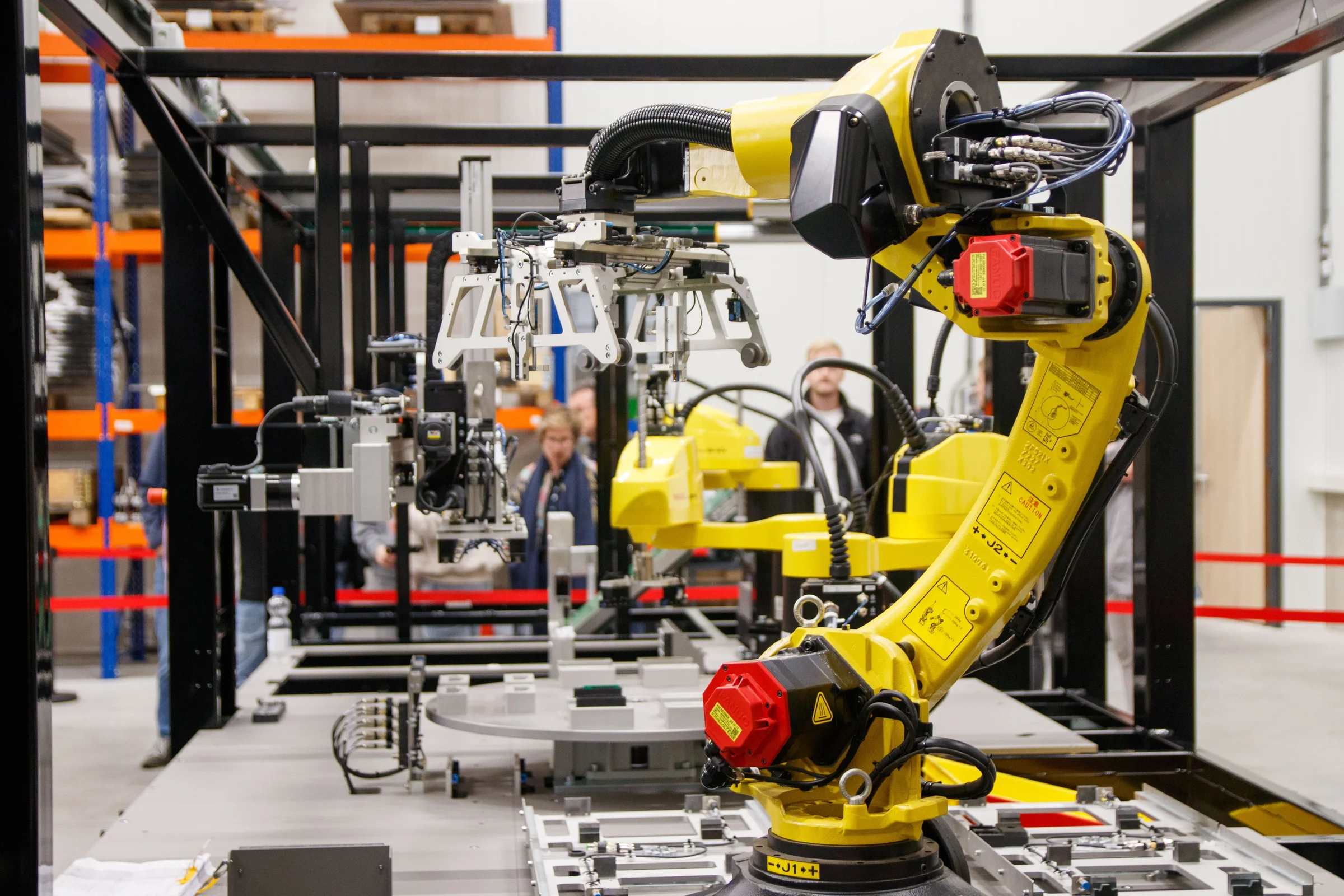
Tooling, perception and controls turn a robotic arm into a working cell. Each element is selected for the task and operating environment.
Grippers, fixtures, grasp planning and feedback are matched to the object and task. Changeovers and recovery are part of the configuration.
Cameras and measurement devices support sorting and verification. Acceptance covers product variation, uncertain readings and conditions requiring a stop or operator review.
Delivery
Service robots move goods through hotels, hospitals, universities and managed campuses, with defined routes, access and handoff conditions.
Connect loading points, doors, lifts and charging. Define how operators handle blocked routes, failed deliveries and recovery.
Plan crossings, weather limits and remote assistance around the site. Track the request through dispatch, arrival and confirmed receipt.
Infrastructure
Compute, connectivity and controls give equipment the infrastructure it needs to operate reliably on site.
Industrial computers and edge accelerators run perception, inference and workload services, retaining operating data locally where required.
Industrial networks, gateways and segmented service access connect equipment. Commissioning checks coverage, permissions and recovery from interrupted connections.
Controllers, sensing, interlocks and operator interfaces govern execution. Machine safety functions retain authority within the local control architecture.
System Acceptance
Acceptance testing verifies the installed system against the customer’s goods, workflow and operating conditions before it enters service.
Test representative products, loads and transfer points through normal cycles and recovery. Record performance and operator handoffs against agreed criteria.
Record interfaces, settings, maintenance and responsibilities. Train operators, then assess future changes against the accepted configuration before release.
Planning
How equipment is selected, existing systems are retained and deployments expand.
Yes. The engineering assessment identifies equipment that can remain, interfaces that can be connected and work that should stay manual. Replacement is proposed where suitability, support or integration limits justify it.
We start with the task, material, environment and operating schedule. The proposal defines equipment, tooling, interfaces and acceptance criteria, together with installation and service responsibilities.
Expansion is planned around the installed configuration, site capacity and commercial term. Additional equipment or workcells pass through the same interface, commissioning and acceptance process as the initial installation.
Acquisition
Combine equipment, deployment engineering, service and commercial terms in one programme.